OLANUSI...Innovation in Motion, Value in Action....

GENITAL HYGIENE
MEDICAL AND HEALTH SCIENCE DIVISION
Preventive Health Department
12/1/20253 min read
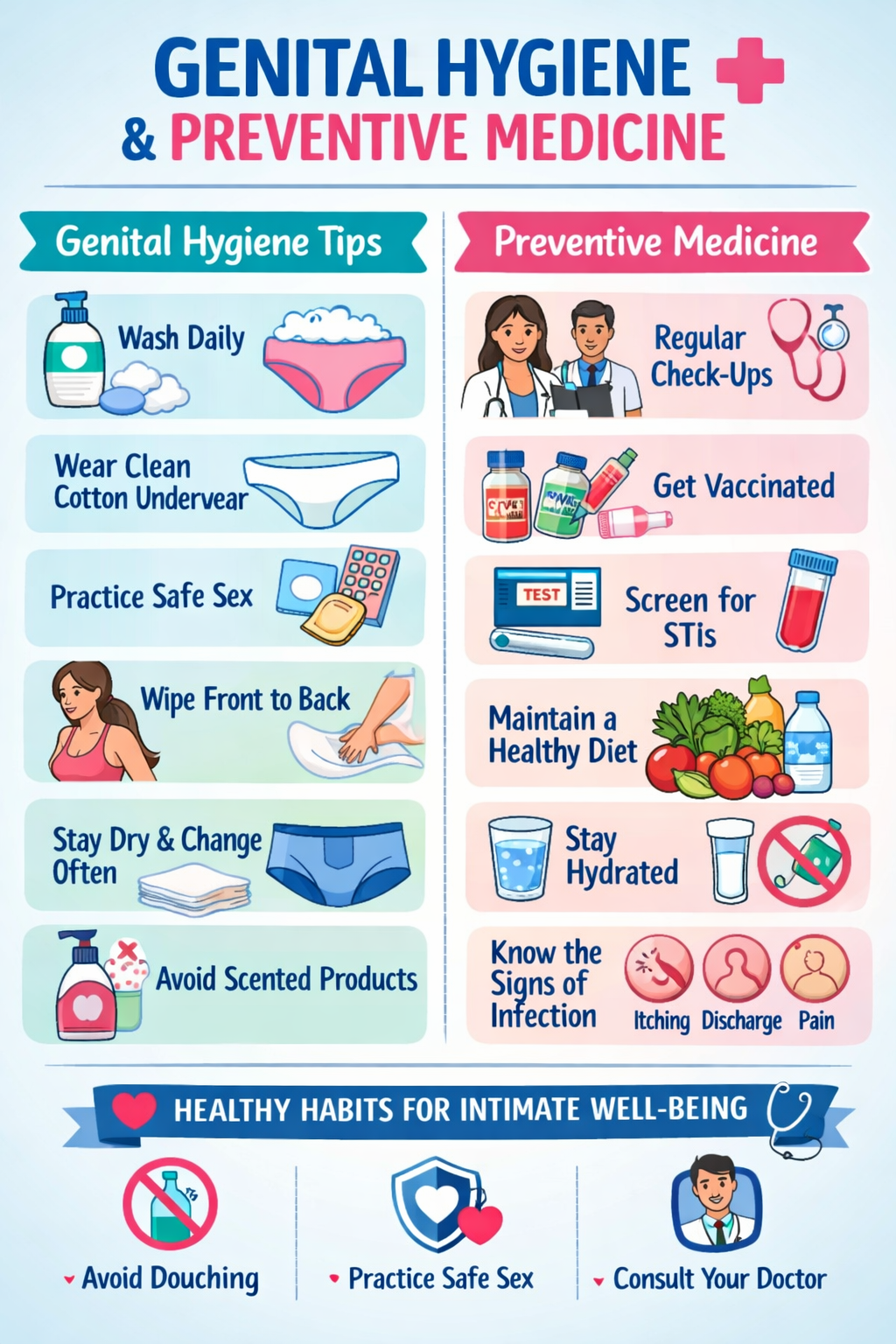
Genital hygiene is an important part of maintaining overall health, preventing infections, and supporting dignity and well-being. Our skin is our first defence and if it is inflamed or broken, it provides an entry for germs to spread around the area. Good genital hygiene practices help reduce the risk of common problems such as itching, rashes or lumps, bad odor, and certain infections. Clean water is often sufficient to wash your genitals, and when soap is used, it should be gentle and limited to the outer area of the genitals. There are a number of ways to protect and look after your genital skin .find out more below.
Why Genital Hygiene Matters
• Prevents irritation and discomfort.
• Reduces the risk of bacterial and fungal infections.
• Supports menstrual health and comfort.
• Helps prevent urinary tract infections (UTIs).
• Promotes sexual and reproductive well-being.
• Encourages body awareness and confidence.
General Principles For Hygiene Practices
• Use warm water and mild soap to wash the external genital area (vulva/penis and surrounding skin) once daily is usually enough unless there is heavy sweating. Dont over-wash, as this will wash away your good, healthy bacteria and cause you symptoms.
• Avoid harsh scented products, including bubble baths, sprays as this can cause irritation to the genital skin.
• Avoid scrubbing harshly: use your hands instead of a washcloth or sponge, which can be abrasive.
• Rinse thoroughly with clean water to remove all soap residues.
• Dry gently by patting the area with a soft, clean towel. Ensure the area is thoroughly dry, especially the skin folds, to prevent moisture build up and potential infections.
• Wash your hands before and after using the toilet.
• Do not remove pubic hair, as it protects our genitals from external irritants, such as dirt and bacteria– much like the role of the hair on our heads, eyelashes and eyebrows.
Hygiene Practices For People With a Vulva
• Daily Washing: Clean the genital area once a day with clean water. The
internal vagina is a self-cleaning organ, so you don’t need to do much to it. Avoid harsh perfumed, or antiseptic soaps, as they can cause irritation and genital dryness. Mild, unscented soap and water can be used externally (not inside vaginal or urinary opening).
• Safe Toilet Practices: Wipe from front to back to avoid spreading bacteria. Clean the outer genital area only—no douching or washing inside, as this can cause damage to the delicate lining of the vagina or anus, leaving you more susceptible to infections.
• Gently pat dry with a clean towel, to prevent heat and moisture buildup. Moisture can encourage fungal infections.
• During menstruation: Change pads every 4–6 hours or tampons/menstrual cups as recommended and dispose menstrual products properly. Wash hands thereafter.
Hygiene Practices For People With a Penis
• Wash the entire genital area daily with gentle soap. If uncircumcised, gently pull back the foreskin and wash underneath, follow by proper rinsing.
• Dry the area completely before wearing underwear.
• Hygiene During Sexual Activity
• Wash before and after sex
• Use condoms to reduce infection risk.
• Avoid sharing towels or personal items.
Lifestyle and Clothing
• Sleep without underwear. Try to go underwear free with a loose fitting pair of pyjama bottoms to allow fresh air to get to your genital skin.
• Wear clean, breathable cotton underwear, it helps prevent excess heat and sweating to the area. Change underwear daily.
• Use non-biological laundry detergents for washing underwear and avoid fabric softeners.
Conclusion
Genital hygiene is an essential part of personal health and overall well-being. It is important for reducing health risks and encouraging healthy lifestyles.
By prioritizing good hygiene through regular washing with clean water, wearing clean and breathable underwear, and practicing safe habits promotes comfort, confidence, and reproductive health.
Don't be afraid to seek advice from our healthcare professional about your genital hygiene.
OLANUSI
Innovation in Motion, Value in Action.
© 2026. All rights reserved.